
Running a private medical practice in Manchester, NH has never been more challenging. Rising operational costs, growing payer complexity, staffing shortages, and an evolving regulatory landscape are putting pressure on practice margins from every direction. At the center of it all sits your revenue cycle, the backbone of your financial health.
If your revenue cycle is not running at peak efficiency in 2026, you are likely leaving significant money on the table. According to industry research, claim denial rates industry-wide hover between 10 and 15 percent, and an alarming 60 percent of denied claims are never resubmitted. For a busy independent practice, that translates directly into lost revenue and increased stress.
This guide breaks down what revenue cycle management (RCM) really means in 2026, the trends reshaping how practices get paid, and how working with an expert partner like Orchard Medical Management’s Revenue Cycle Management team in Manchester can help your practice protect its revenue and thrive.
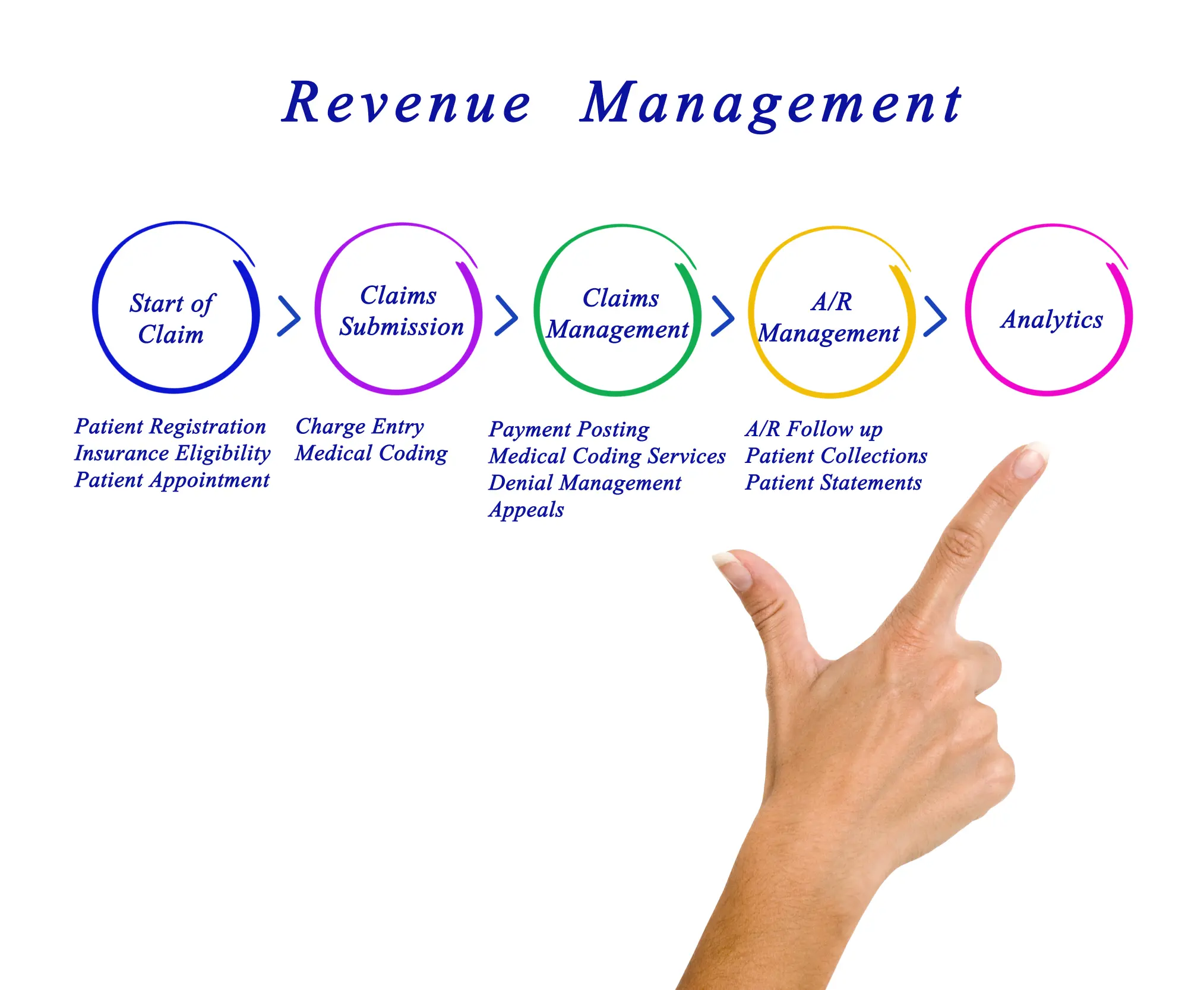
What Is Revenue Cycle Management and Why Does It Matter?
Revenue cycle management is the end-to-end financial process that covers everything from the moment a patient schedules an appointment to the final collection of payment. It includes patient registration, insurance eligibility verification, medical coding, claims submission, payment posting, denial management, and patient billing.
Strong RCM is the difference between a practice that consistently captures what it earns and one that routinely absorbs write-offs and collection gaps. For independent and private practices in Manchester and across New Hampshire, this matters even more because smaller teams often lack the bandwidth to manage every step of the cycle with the precision it requires.
The global revenue cycle management market reached an estimated $85.2 billion in 2025 and is forecasted to grow at a compound annual growth rate of over 11 percent through 2034. That growth reflects the increasing complexity of healthcare billing and the growing demand for specialized RCM expertise. In short: this is not a back-office function you can afford to handle on autopilot.
The 2026 Revenue Cycle Landscape: What Has Changed
Several major shifts in 2026 are directly impacting how private practices manage their revenue cycles. Understanding these changes is the first step toward protecting your bottom line.
Payer Denials Are the Number One Revenue Risk
A recent industry report found that nearly two-thirds of healthcare leaders identified denials and underpayments as their single largest barrier to revenue growth in 2026. Payer behavior, not internal inefficiency, is now the primary driver of revenue risk. Practices that rely on reactive denial management are falling behind.
Prior Authorization Volume Keeps Growing
Prior authorization requirements have increased by approximately 30 percent over the past three years. Each unapproved or improperly submitted authorization creates a potential claim denial, delayed reimbursement, or write-off. For practices already stretched thin on staffing, this administrative burden is unsustainable without a structured system.
Patient Financial Responsibility Is Rising
High-deductible health plans are now commonplace, which means patients are responsible for a larger share of the total bill. Practices that wait until after a service to discuss costs face lower collection rates and reduced patient satisfaction. Proactive financial engagement, including pre-visit cost estimates and flexible payment options, has become a standard expectation.
CMS Reimbursement Pressures Continue
CMS reduced the Medicare conversion factor by 2.83 percent in 2025, a cut that many practices are still absorbing. Further efficiency adjustments tied to budget neutrality are expected. For practices with significant Medicare patient populations, capturing every eligible dollar through accurate coding and timely claims submission is non-negotiable.
Key Components of an Effective Revenue Cycle in 2026
Whether you are evaluating your current RCM setup or exploring outsourced solutions, here are the core functions that high-performing practices are prioritizing.
- Proactive insurance eligibility verification: Checking coverage at least 48 hours before an appointment dramatically reduces denial rates.
- Accurate and compliant medical coding: Keeping current with ICD-10 updates and payer-specific coding requirements is essential for clean claim submissions.
- Systematic denial management: Analyzing denial patterns, prioritizing high-value appeals, and implementing upstream fixes to prevent recurring issues.
- Patient-centered billing: Clear cost communication, multiple payment options, and consistent follow-up that balances collections with a positive patient experience.
- Real-time reporting and KPI tracking: Monitoring key metrics like clean claim rates (targeting 98 to 99 percent), days in A/R (ideally 30 to 40 days), and denial rates provides the visibility needed to act quickly.
Why Manchester, NH Private Practices Choose to Partner with an RCM Expert
Managing a full revenue cycle in-house requires dedicated staff, ongoing training, advanced technology, and constant attention to payer policy changes. For most independent practices, this is simply not feasible at the level required to consistently optimize collections.
Outsourcing or co-managing your revenue cycle to a specialized partner delivers measurable advantages:
- Experienced billing and coding professionals who stay current on payer rules and regulatory changes
- Faster claims submission and reduced time in accounts receivable
- Proactive denial management that captures revenue that would otherwise be written off
- Transparent reporting and performance dashboards so you always know where your revenue stands
- Freedom for your clinical team to focus on patient care instead of administrative tasks
At Orchard Medical Management, we have been serving New England private practices from Manchester, NH for over 20 years. Our Revenue Cycle Management services are built around a simple mission: helping your practice capture more of the revenue it earns, so you can stay focused on your patients and your community.
Beyond RCM: Comprehensive Support for Your Manchester Practice
A healthy revenue cycle does not exist in isolation. It works best when it is aligned with smart practice management, HR, and financial oversight. That is why Orchard Medical Management offers a full suite of services designed to support every dimension of your private practice.
Our Practice Management services help with budgeting, staffing models, and service line expansion. Our Human Resources team handles benefits, payroll, and the full employee lifecycle. And our full portfolio of services includes credentialing, insurance solutions, merchant solutions, and more, all designed to reduce administrative burden and support your financial performance.
Frequently Asked Questions About Revenue Cycle Management in Manchester, NH
1. What is revenue cycle management and how does it differ from medical billing?
Medical billing is one component of the revenue cycle, specifically focused on submitting claims to payers. Revenue cycle management is the complete financial process from patient registration to final payment. It includes eligibility verification, coding, claims submission, denial management, patient billing, and reporting. RCM takes a broader, more strategic view of your practice’s financial performance.
2. How do I know if my Manchester practice’s revenue cycle is underperforming?
Common warning signs include high claim denial rates (above 5 percent is a red flag), days in accounts receivable consistently over 40 days, a significant volume of unapproved write-offs, staff spending excessive time on billing follow-up, or declining collections despite stable patient volume. An RCM audit can quickly identify where your practice is losing revenue.
3. How much can outsourcing revenue cycle management save my practice?
Practices that outsource or optimize their RCM processes often see meaningful improvements in clean claim rates, faster reimbursement timelines, and reduced write-offs. While exact savings vary based on practice size, specialty, and payer mix, industry benchmarks suggest that inefficient RCM processes can cost practices up to 15 percent of potential revenue. The right partner can help you recover a significant portion of that.
4. What healthcare specialties do RCM services in Manchester, NH support?
Revenue cycle management services can be tailored to virtually any specialty, including primary care, internal medicine, orthopedics, cardiology, behavioral health, and more. Each specialty has unique coding requirements, payer rules, and documentation standards. An experienced RCM partner like Orchard Medical Management understands these nuances and applies specialty-specific expertise to maximize your reimbursements.
5. How does Orchard Medical Management approach revenue cycle management for private practices in New Hampshire?
Orchard Medical Management takes a hands-on, relationship-driven approach. We work closely with each practice to understand your specific payer mix, operational workflows, and financial goals. From coding and claims submission to denial management and reporting, our team serves as an extension of your practice, delivering the expertise and attention your revenue cycle deserves. We have proudly served New England practices from our Manchester, NH headquarters for over 20 years.
Take Control of Your Revenue Cycle in 2026
The financial pressures facing private practices in 2026 are real, but they are manageable with the right support. A well-run revenue cycle is not just a billing function; it is a strategic asset that directly enables you to invest in your patients, your staff, and the future of your practice.
If your Manchester, NH practice is ready to stop leaving revenue on the table, the team at Orchard Medical Management is here to help. Explore our full range of medical management services or reach out directly to learn how we can build a stronger revenue cycle for your practice.